
Exploring the Leviathan: Historical Significance, Mythology, and Its Role in Modern Witchcraft
- thebluebodhi

- Feb 18
- 3 min read
The Leviathan is a powerful symbol that has fascinated people for centuries. Often described as a monstrous sea creature, it appears in ancient texts, religious scriptures, and folklore. Its meaning has evolved over time, influencing culture, religion, and even modern spiritual practices like witchcraft. This post explores what the Leviathan is, its historical and mythological roots, and how it is used today in modern witchcraft.
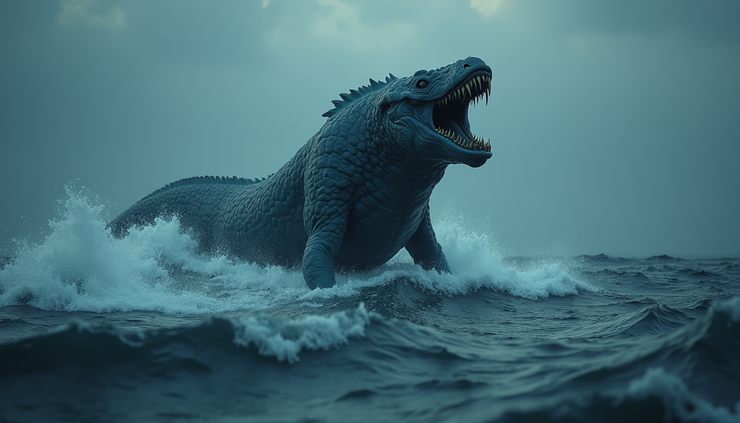
What Is the Leviathan?
The Leviathan is traditionally depicted as a massive sea monster or dragon. The word itself comes from the Hebrew livyatan, meaning twisted or coiled. It appears in several ancient texts, most notably the Hebrew Bible, where it symbolizes chaos and untamable power. In these early writings, the Leviathan represents the forces of nature that challenge human control.
In the Book of Job, the Leviathan is described as a creature no human can capture or tame, emphasizing its strength and mystery. This portrayal made the Leviathan a symbol of the unknown and the uncontrollable aspects of the natural world.
Historical and Mythological Background
The Leviathan’s roots go beyond the Bible. Similar sea monsters appear in many ancient cultures:
Mesopotamian Mythology: The Tiamat was a primordial sea goddess often depicted as a dragon or serpent. She represented chaos and was defeated by the god Marduk, symbolizing order overcoming disorder.
Greek Mythology: The sea monster Cetacean or Cetus was a giant creature sent to punish humans or gods. It often appears in stories involving heroes like Perseus.
Norse Mythology: The Jörmungandr, or Midgard Serpent, encircled the world and was destined to fight the god Thor during Ragnarok.
These myths share common themes: the Leviathan and its counterparts symbolize chaos, danger, and the vast unknown of the sea. They often represent forces that gods or heroes must confront to restore balance.

Symbolism and Meaning
The Leviathan carries rich symbolism:
Chaos and Power: It embodies the uncontrollable forces of nature and the universe.
Destruction and Creation: In some myths, the Leviathan’s defeat leads to the creation of the world or new order.
Fear and Respect: It represents what humans fear but also respect for its strength and mystery.
Spiritual Challenge: The Leviathan can symbolize internal struggles or spiritual battles.
In religious contexts, the Leviathan sometimes represents evil or demonic forces. In other traditions, it is a neutral or even protective figure, depending on the story.
The Leviathan in Modern Witchcraft
Today, the Leviathan has found a place in modern witchcraft and occult practices. It is often invoked as a symbol of primal power, transformation, and deep spiritual insight. Here are some ways it is used:
Elemental Association: The Leviathan is linked to the element of water, representing emotions, intuition, and the subconscious.
Protection and Power: Some witches call upon the Leviathan for strength and protection against negative energies.
Transformation: Its association with chaos and creation makes it a symbol for personal transformation and breaking old patterns.
Ritual Use: The Leviathan may appear in spells or rituals focused on deep emotional healing or confronting fears.
Practitioners often use symbols or images of the Leviathan in altars, talismans, or meditation to connect with its energy. It serves as a reminder of the vast, mysterious forces within and around us.

Practical Examples in Witchcraft
Water Rituals: Using water from natural sources, practitioners may call on the Leviathan to cleanse emotional blockages.
Meditation: Visualizing the Leviathan can help explore subconscious fears and unlock hidden strength.
Protection Spells: Incorporating Leviathan symbols into protective charms to guard against psychic attacks.
Creative Work: Artists and writers might invoke the Leviathan to inspire creativity born from chaos and deep emotion.
These practices show how the Leviathan’s ancient symbolism adapts to modern spiritual needs, offering a bridge between myth and personal growth.


So cool! Interesting information. I always learn something from you.❤️🤗 Thank you 😊