
Mother Shipton: The Prophetic Witch of Yorkshire
- Scarly

- Jul 20, 2025
- 4 min read
In the rolling green hills of Yorkshire, England, beneath a veil of mist and myth, the legend of a witch named Mother Shipton continues to echo through time. Half historical figure, half folklore enchantress, Mother Shipton has endured for centuries as one of Britain’s most iconic prophetic witches. Her tales are wrapped in rhyme, mystery, and a dash of apocalyptic vision, making her both feared and revered in the annals of occult history.
Born as Ursula Southeil in the year 1488, during the reign of Henry VII, her life began in the shadows. She was said to be the illegitimate child of a 15-year-old girl named Agatha, who gave birth to Ursula in a cave near Knaresborough, by the River Nidd. The father’s identity was never known, giving rise to wild rumors that the child was sired by the Devil himself, a theme that would follow Ursula throughout her life. Her strange birth was marked by thunder, lightning, and an eerie silence that fell over the forest, adding to the supernatural lore surrounding her.
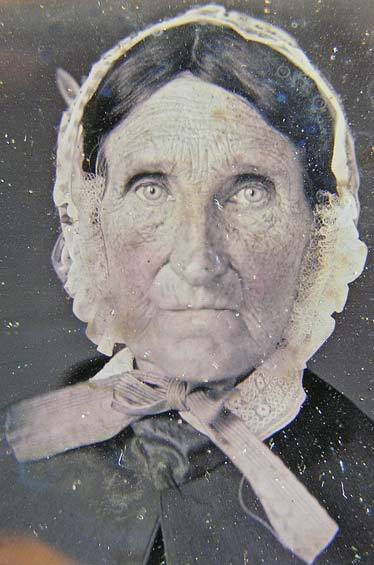
From a young age, Ursula was not like other children. Accounts claim that she was born with a crooked back, bulging eyes, and a nose that curled downward like a hook. Villagers whispered that she could vanish into thin air, speak in tongues, or summon spirits from the earth. Animals behaved strangely in her presence, and objects were said to move on their own when she walked by. In an era where superstition and religion were tightly intertwined, such signs were considered unmistakable proof of witchcraft.
But Ursula was more than a rural curiosity. She grew into a wise woman, a herbalist, and most famously, a prophetess. She married a carpenter named Tobias Shipton at the age of 24, which led to her now-legendary moniker: Mother Shipton. While little is known of Tobias, some say he died young, leaving Ursula to walk her path alone. She never remarried, instead devoting herself to her craft, her visions, and the people who came from far and wide to seek her counsel.
Mother Shipton’s prophecies were poetic, cryptic, and often grim. She foresaw wars, plagues, and political upheaval, all told in rhyming verse. Many of her predictions were said to have come true during her lifetime, lending weight to her legend. Most famously, she is credited with foretelling the dissolution of the monasteries under Henry VIII, the Great Fire of London in 1666, and even the advent of modern technology.
One of her most quoted prophecies, often debated for its authenticity, speaks hauntingly of future inventions:
“Carriages without horses shall go, And accidents fill the world with woe. Around the world thoughts shall fly, In the twinkling of an eye.”
To modern readers, this may sound like a vision of automobiles and telecommunications. However, scholars have argued that many of these prophecies were edited, or outright fabricated, by later authors who sought to capitalize on the Victorian fascination with spiritualism. In fact, the first known published collection of her prophecies did not appear until 1641, decades after her death in 1561. This has led some to question how much of the lore is truly hers and how much is mythos spun by later imaginations.
Still, legend has power, and Mother Shipton’s has only grown. Her cave in Knaresborough, now known as Mother Shipton’s Cave, has become a site of pilgrimage. Nearby is the petrifying well, a place where objects left in the water slowly turn to stone due to its high mineral content. Locals once believed this was the result of her magic. Today, teddy bears, shoes, and trinkets hang along the water’s edge, calcifying into ghostly relics, further blurring the line between the mundane and the mystical.

So, was Mother Shipton truly a witch? That depends on who is telling the tale. To some, she was a devil’s child, an omen of doom. To others, she was a wise crone who used her gifts to help, heal, and warn. In many ways, she fits the classic archetype of the “cunning woman” of English folk tradition, a blend of healer, seer, and midwife who lived on the fringes of society but was deeply embedded in its fabric.
Her image as a hook-nosed, broom-riding hag also mirrors the evolution of how witches were perceived and persecuted over time. During her life, she largely avoided the fate of so many other women accused of witchcraft, perhaps due to her popularity, or perhaps because she was too feared to be touched. Either way, her story has survived, carrying with it the voice of a woman who saw far beyond the veil of her time.
Today, in a world teetering between skepticism and spiritual reawakening, Mother Shipton stands as a symbol of prophetic vision and feminine power. She reminds us that wisdom often lives outside the bounds of convention and that truth can be spoken in riddles and rhyme. Whether seen as a historical seer or a mythical witch, her essence continues to inspire witches, mystics, and seekers to listen to the whisper of fate, the pull of the unknown, and the magic that stirs just beneath the surface of the everyday.
Final Thoughts
Mother Shipton’s tale weaves together the fears and fascinations of her time, witchcraft, prophecy, the mysterious feminine, and crystallizes them into a lasting legend. As a folk witch, she speaks not only to England’s magical past but to a collective yearning for insight, power, and connection to the unseen world. In honoring her, we honor the power of story, the resilience of women accused and misunderstood, and the timeless dance between shadow and light.

Comments